When it comes to cold-chain temperature monitoring, choosing the right sensor is only part of the equation. Where you place the temperature sensor can have just as much impact on the accuracy and usefulness of your readings.
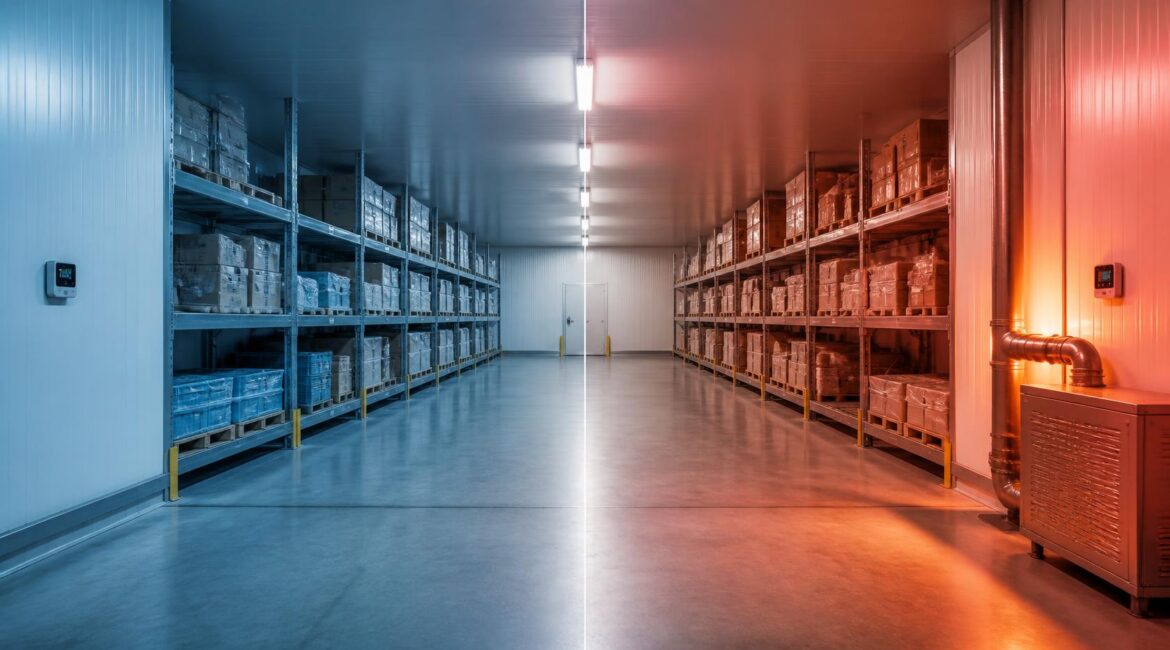
Temperature can vary significantly within a refrigerator, cold room, warehouse, or refrigerated vehicle. Airflow, doors, refrigeration equipment, product loading, and external temperatures can all create warmer and colder areas.
So, where should you place your temperature sensor?
Why Temperature Sensor Placement Matters
A temperature sensor measures the temperature at the location where it is installed. If that location isn’t representative of the conditions your products are experiencing, the data may give you a misleading picture of your cold-chain environment.
For example, a sensor positioned directly in front of a refrigeration outlet may record a much colder temperature than the products elsewhere in the room. Likewise, a sensor placed next to a frequently opened door may record short-term temperature fluctuations that don’t represent the overall storage conditions.
The goal isn’t simply to measure temperature. It’s to measure the temperature that matters.
5 Factors to Consider When Positioning a Temperature Sensor
1. Consider Airflow
Airflow is one of the most important factors when deciding where to install a temperature sensor.
Refrigerated environments often have areas that are colder or warmer depending on how air moves through the space. Avoid placing a sensor directly in a strong stream of refrigerated air unless you specifically want to measure that airflow.
Instead, consider where the products are stored and where the sensor can provide a representative reading.
2. Consider Where the Products Are Stored
Your sensor should ideally measure conditions that are relevant to the products you’re protecting.
Consider:
- Where are the temperature-sensitive products located?
- Are products stored on shelves, pallets, or racks?
- Does temperature vary between different heights?
- Are there areas with restricted airflow?
A sensor mounted high on a wall, for example, may not accurately represent the temperature around products stored at a lower level.
For larger environments, multiple sensors may be required to monitor different areas.
3. Avoid Direct Heat Sources
Sensors should be positioned away from localized sources of heat that don’t represent the actual storage environment.
Avoid installing sensors directly beside:
- Lights
- Motors or electrical equipment
- Heating elements
- External walls exposed to sunlight
- Other sources of localized heat
Direct sunlight or heat from nearby equipment can influence the sensor reading and create inaccurate data.
4. Think About Doors and Access Points
Doors are a common source of temperature fluctuations in cold rooms, refrigerators, freezers, and refrigerated vehicles.
Every time a door opens, warmer air can enter and temporarily affect the temperature.
Installing a sensor directly beside a door may therefore result in frequent temperature fluctuations.
However, this isn’t always a reason to avoid the area. If you’re specifically interested in monitoring the effect of door openings, a sensor near the door can provide valuable information.
The important question is: what are you trying to monitor?
5. Understand Your Monitoring Objective
Perhaps the most important consideration is understanding what you want your temperature monitoring system to tell you.
Are you trying to:
- Monitor general storage conditions?
- Protect temperature-sensitive products?
- Identify potential warm spots?
- Monitor a specific storage zone?
- Verify conditions during transportation?
The answer can influence where the sensor should be installed.
How Many Temperature Sensors Do You Need?
There isn’t a universal number of sensors that works for every environment.
A small refrigerator may only require one monitoring point, while a large cold room or warehouse could have significant temperature differences across different areas.
The number of sensors you need depends on factors such as:
- The size of the environment
- Airflow
- Product distribution
- Temperature variability
- Number of storage zones
- The sensitivity of the products
For larger or more complex environments, temperature mapping can be extremely useful.
What Is Temperature Mapping?
Temperature mapping is used to understand how temperature varies throughout a particular environment.
During a mapping exercise, multiple sensors are placed throughout an area to identify temperature variations, including potential hot and cold spots.
This information can then help determine where permanent temperature monitoring sensors should be installed.
For example, if mapping shows that one particular area of a cold room consistently experiences higher temperatures, that area may deserve a permanent monitoring point.
Common Temperature Sensor Placement Mistakes
Some of the most common mistakes include:
Installing the sensor wherever it is convenient:
The easiest location isn’t necessarily the most representative.
Placing it directly in refrigeration airflow:
This can produce readings that are colder than the conditions experienced by the products.
Installing it next to a door:
This can exaggerate temperature fluctuations caused by frequent door openings.
Placing it near a heat source:
Sunlight, lights, motors, and other equipment can affect the reading.
Assuming one sensor is enough:
Large or complex environments can contain multiple temperature zones that one sensor cannot adequately represent.
The Right Location Makes Better Data
An accurate temperature sensor can only provide useful information if it is installed in an appropriate location.
Before installing a sensor, consider the airflow, product location, doors, heat sources, storage levels, and the overall purpose of your monitoring system.
For larger cold rooms, warehouses, and other complex environments, temperature mapping can provide valuable insight into where monitoring points should be located.
The best temperature sensor location isn’t necessarily the coldest, warmest, or easiest-to-reach spot. It’s the location that gives you meaningful information about the conditions that matter most.
If you’re looking for a reliable cold-chain temperature monitoring solution, or need assistance with sensor placement in your cold room, refrigerator, warehouse, or refrigerated vehicle, contact us to find out more about our range of temperature monitoring solutions.