In industries where temperature-sensitive products are critical—such as pharmaceuticals, food and beverage, healthcare, and logistics—the cold chain is only as strong as its weakest link. A single temperature excursion can lead to spoiled products, regulatory non-compliance, financial losses, and reputational damage.
For years, businesses relied on reactive temperature monitoring systems that alerted operators only after a problem occurred. Today, however, advancements in technology are transforming the way organizations manage their cold chain operations. Predictive cold chain monitoring is emerging as the next evolution in temperature control, helping businesses identify potential risks before they become costly failures.
In this article, we’ll explore what predictive cold chain monitoring is, how it works, and why it is becoming essential for modern cold chain management.
What is Predictive Cold Chain Monitoring?
Predictive cold chain monitoring uses advanced analytics, real-time data collection, machine learning, and connected temperature monitoring devices to forecast potential issues before they impact products.
Unlike traditional monitoring systems that simply record temperature data or send alerts after a temperature breach occurs, predictive systems analyze patterns and trends to identify early warning signs of equipment failures, temperature instability, or operational inefficiencies.
By leveraging historical and real-time data, predictive monitoring enables businesses to take proactive action and prevent disruptions before they happen.
Why Traditional Temperature Monitoring Is No Longer Enough
Traditional temperature monitoring systems have served businesses well for decades, but they often operate on a reactive model:
- Temperature exceeds a set threshold
- An alarm is triggered
- Staff respond to the issue
- Damage may already have occurred
While alerts remain important, they don’t always provide enough time to prevent product loss.
For example, if a refrigeration unit begins performing inefficiently, temperature readings may remain within acceptable limits for hours or even days before a critical failure occurs. By the time an alarm sounds, inventory could already be at risk.
Predictive cold chain monitoring changes this approach by identifying subtle indicators of future problems long before temperatures reach dangerous levels.
How Predictive Cold Chain Monitoring Works
Modern predictive monitoring solutions combine several technologies:
1. Real-Time Temperature Monitoring
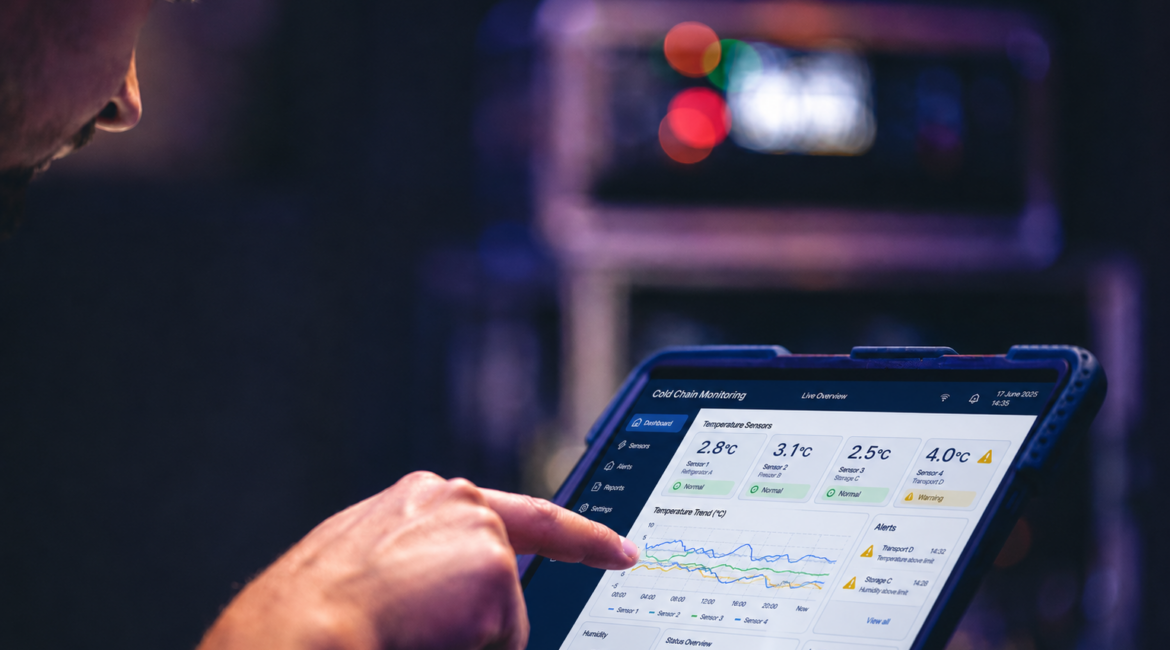
Connected sensors continuously collect environmental data, including:
- Temperature
- Humidity
- Door openings
- Equipment performance metrics
- Power status
This data provides complete visibility across the cold chain.
2. Cloud-Based Data Analytics
Data from temperature monitoring devices is transmitted to secure cloud platforms where advanced analytics tools process information from multiple locations and assets.
Cloud-based systems allow organizations to monitor facilities, vehicles, warehouses, and refrigeration units from a single dashboard.
3. Machine Learning Algorithms
Machine learning models analyze historical performance patterns and identify anomalies that may indicate:
- Compressor degradation
- Refrigeration system inefficiencies
- Increasing temperature fluctuations
- Power supply issues
- Human operational errors
The system learns over time and becomes increasingly accurate at predicting potential failures.
4. Predictive Alerts
Instead of only alerting users after a temperature excursion occurs, predictive systems can generate notifications such as:
- “Refrigeration unit efficiency declining”
- “Increased risk of temperature excursion within 24 hours”
- “Maintenance recommended for cooling system”
This provides maintenance teams with valuable time to address issues proactively.
Key Benefits of Predictive Cold Chain Monitoring
Reduced Product Loss
One of the most significant advantages of predictive monitoring is minimizing spoilage and product waste.
Whether transporting vaccines, pharmaceuticals, fresh produce, or frozen foods, early intervention helps maintain product integrity and prevents costly losses.
Improved Regulatory Compliance
Regulatory bodies increasingly require detailed temperature records and proof of proper cold chain management.
Predictive monitoring provides comprehensive data logs, audit trails, and reporting capabilities that support compliance with industry regulations and quality standards.
Lower Maintenance Costs
Predictive maintenance is often more cost-effective than emergency repairs.
By identifying equipment issues before breakdowns occur, businesses can schedule maintenance strategically, reducing downtime and extending equipment lifespan.
Enhanced Operational Efficiency
Predictive insights allow managers to optimize refrigeration performance, energy consumption, and logistics operations.
The result is a more resilient and efficient cold chain infrastructure.
Greater Customer Confidence
Customers expect temperature-sensitive products to arrive safely and within specification.
Predictive monitoring helps businesses consistently meet these expectations, strengthening customer trust and brand reputation.
Industries Benefiting from Predictive Cold Chain Monitoring
Pharmaceutical and Healthcare
Vaccines, biologics, blood products, and medications require strict temperature control throughout storage and transportation.
Predictive monitoring helps safeguard patient safety and maintain regulatory compliance.
Food and Beverage
Food manufacturers, distributors, and retailers use predictive monitoring to reduce spoilage, improve shelf life, and ensure food safety.
Logistics and Transportation
Cold chain logistics providers benefit from greater visibility into fleet performance, helping maintain product quality during transit.
Laboratories and Research Facilities
Research samples and sensitive materials often require highly stable environmental conditions.
Predictive monitoring minimizes risks that could compromise valuable research and testing processes.
The Role of IoT in Predictive Monitoring
The growth of the Internet of Things (IoT) has accelerated the adoption of predictive cold chain monitoring.
Modern IoT temperature sensors provide:
- Continuous monitoring
- Remote access
- Automated alerts
- Data analytics integration
- Real-time reporting
As sensor technology becomes more affordable and sophisticated, predictive monitoring is becoming accessible to organizations of all sizes.
Preparing for the Future of Cold Chain Management
As supply chains become more complex and regulatory requirements continue to evolve, businesses can no longer rely solely on reactive monitoring strategies.
Predictive cold chain monitoring represents a major shift toward proactive risk management. Organizations that embrace these technologies gain better visibility, reduce operational risks, improve compliance, and protect valuable inventory.
Investing in modern temperature monitoring solutions today helps build a more resilient cold chain for tomorrow.
The rise of predictive cold chain monitoring is transforming how businesses protect temperature-sensitive products. By combining real-time temperature monitoring, cloud-based analytics, IoT technology, and predictive intelligence, organizations can move beyond simply responding to problems and begin preventing them altogether.
As the cold chain industry continues to evolve, predictive monitoring will become a key component of operational excellence, helping businesses reduce waste, improve compliance, and ensure product quality every step of the way.
For companies seeking greater control and visibility across their cold chain operations, predictive temperature monitoring is no longer just an innovation—it’s becoming a necessity.