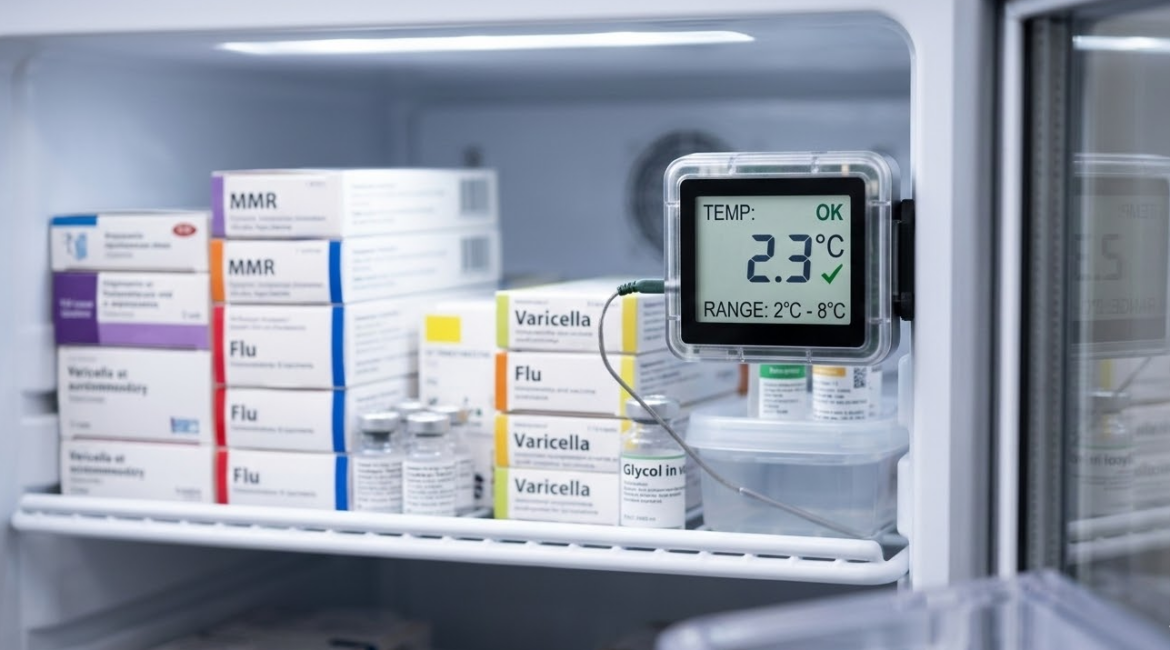
For businesses that handle temperature-sensitive products including pharmaceuticals, vaccines, laboratory reagents, food products, and other perishable goods — temperature control and monitoring is a critical operational and legal requirement. Failure to properly monitor and document temperature can result in product spoilage, financial losses, regulatory penalties, and insurance disputes.
Beyond operational efficiency, temperature monitoring directly impacts insurance claims and liability exposure. Insurers often demand proof that products were stored under controlled conditions, and failure to provide accurate records may lead to denied or reduced claims.
In this article, we explore why temperature monitoring is essential, how it influences insurance claims, the legal implications of failing to monitor temperatures, and best practices for South African businesses.
Why Temperature Monitoring Matters for Insurance
Insurance providers evaluate risk based on the likelihood of loss and the measures taken to prevent it. For businesses managing temperature-sensitive items, risk assessment often depends on whether a reliable temperature monitoring system is in place.
Key benefits of proper temperature monitoring include:
- Evidence for insurance claims: Detailed records prove that products were stored under safe conditions.
- Early detection of excursions: Alarms and alerts enable quick corrective action to prevent loss.
- Regulatory compliance: Many industries in South Africa are governed by GMP, GDP, HACCP, or Department of Health regulations, which require documented temperature control.
- Reduced liability: Demonstrating proper monitoring protects businesses from legal claims if products are compromised.
Without accurate records, insurance providers may assume negligence or inadequate risk management, which can jeopardize claims for damaged or lost stock.
How Temperature Data Supports Insurance Claims
When a temperature excursion occurs, insurers often request comprehensive documentation, including:
- Temperature logs from the affected period
- Alarm history showing notifications for excursions
- Calibration certificates proving that devices were accurate
- Equipment service records confirming proper maintenance
- Incident and corrective action reports
Modern digital temperature loggers capture this data automatically, creating a tamper-proof, auditable trail. These devices offer:
- Time-stamped readings with high accuracy
- Minimum and maximum temperature records
- Duration tracking for excursions
- Downloadable reports in PDF or CSV format
- Integration with cloud systems for secure storage
Having this information readily available strengthens insurance claims, demonstrating that losses were unavoidable and that proper monitoring procedures were followed.
The Risks of Inadequate Temperature Monitoring
Failing to implement proper temperature monitoring exposes businesses to multiple risks, including:
1. Financial Loss
Products such as vaccines, medicines, or perishable foods can be expensive. A single temperature excursion may render stock unusable, resulting in direct financial loss. In South Africa, where cold chain logistics are critical for public health initiatives, this risk is particularly significant.
2. Regulatory Non-Compliance
Temperature-sensitive products are subject to strict regulations. Businesses must comply with standards such as Good Distribution Practice (GDP), Good Manufacturing Practice (GMP), and HACCP. Non-compliance can lead to fines, operational shutdowns, or revocation of licenses.
3. Increased Legal Liability
If compromised products are distributed or reach patients, consumers, or clients, inadequate temperature documentation can significantly increase legal exposure. Companies may face lawsuits or claims for damages if they cannot prove proper storage.
4. Reputational Damage
In industries like healthcare and food services, trust is paramount. A temperature-related incident can erode confidence among clients, partners, and the public, impacting long-term business sustainability.
How Effective Temperature Monitoring Reduces Risk
Implementing a robust temperature monitoring system mitigates both insurance and liability risks. Insurers and regulators favor businesses that demonstrate:
- Continuous monitoring with calibrated devices
- Automated alerts and alarms for temperature excursions
- Redundant power solutions to prevent downtime
- Documented corrective actions when excursions occur
- Staff training on monitoring procedures and compliance requirements
By adopting these measures, businesses not only protect their products but also strengthen their insurance position, potentially reducing premiums and improving claims outcomes.
Real-World Example
Consider a South African medical facility storing vaccines in cold rooms:
- A sudden power failure occurs overnight.
- Temperature loggers record the excursion, capturing exact start and end times.
- Alarm notifications alert staff, who implement corrective measures.
- Detailed reports are provided to insurers as part of the claim.
With this evidence, insurers can clearly see that the event was sudden, unforeseeable, and properly managed. Without reliable monitoring data, the claim could be denied, leaving the business liable for replacement costs.
Selecting the Right Temperature Monitoring System
Not all temperature monitoring solutions are created equal. Businesses in South Africa should consider:
- Device accuracy and calibration – Choose devices suitable for your storage range (e.g., freezers, refrigerators, ambient storage).
- Data logging frequency – Higher frequency provides more detailed evidence during excursions.
- Alarm capabilities – SMS or email alerts ensure rapid response.
- Audit trails and compliance reports – Make sure the system generates tamper-proof reports suitable for insurance and regulatory audits.
- Cloud integration – Secure storage reduces the risk of lost or incomplete records.
Investing in a reliable temperature monitoring system is a small cost compared to the potential financial and legal consequences of spoilage or regulatory fines.
Best Practices for Businesses in South Africa
To protect assets, maintain compliance, and strengthen insurance claims, South African businesses should:
- Use calibrated digital data loggers instead of manual checks.
- Implement automated alarm systems for excursions.
- Maintain backup power solutions to prevent equipment downtime.
- Keep accurate service and calibration records.
- Document corrective actions immediately after excursions.
- Train staff in proper temperature monitoring procedures.
- Periodically review monitoring systems to ensure effectiveness.
Following these practices demonstrates a proactive approach to risk management, which insurers recognize as reducing potential claims.
Temperature monitoring is a critical component of risk management, compliance, and insurance preparedness for businesses handling temperature-sensitive products in South Africa.
- Accurate monitoring protects products, reduces financial loss, and ensures regulatory compliance.
- Detailed temperature records support insurance claims, demonstrating that losses were unavoidable and properly managed.
- Businesses that fail to implement robust monitoring face higher liability, increased risk of claim denial, and reputational damage.
By investing in reliable temperature monitoring systems and maintaining proper documentation, businesses safeguard their assets and strengthen their position with insurers.
TMSA provides professional temperature monitoring solutions in South Africa, helping businesses protect products, comply with regulations, and confidently support insurance claims.